How to Avoid Overeating at Dinner: 9 Habits That Work
Dinner is when many of us eat past fullness. Learn why it happens and nine evidence-based habits, from pacing to plating, that help you stop at enough.
Most dinner overeating is a pace and setup problem, not a willpower problem. You arrive hungry, eat fast, and finish the plate before your body has had time to say “enough.” The fix is to slow the meal to the speed of your fullness signals and to arrange your kitchen and table so that second helpings take a decision rather than a reflex. Stummy was built around that idea: you photograph the meal, and the app sets a pace for that specific plate.
TL;DR
- Fullness signals take time to arrive: NIDDK says at least 15 minutes, so a 10-minute dinner finishes before your brain hears the news.
- Do not arrive ravenous. Skipping meals or going too long without eating makes you eat faster and more.
- Plate your food in the kitchen, keep serving dishes off the table, and put screens away.
- Pause mid-meal, check your fullness, and decide on seconds only after a few minutes.
- If dinner overeating is frequent, a pacing tool can make the habit gradual and calm, with no calorie counting.
Table of Contents
- Why dinner is the meal we overshoot
- Habit 1: Show up hungry, not ravenous
- Habit 2: Plate in the kitchen, not at the table
- Habit 3: Put the screen away
- Habit 4: Slow the first ten minutes
- Habit 5: Take a mid-meal pause
- Habit 6: Decide on seconds after a delay
- Habit 7: Make the house portion friendly
- Habit 8: Check in before you eat
- Habit 9: Plan for holidays and big spreads
- A sample dinner, start to finish
- How Stummy helps you pace dinner
- Our perspective
- What to do if you overeat anyway
- FAQ
- Sources
Why dinner is the meal we overshoot
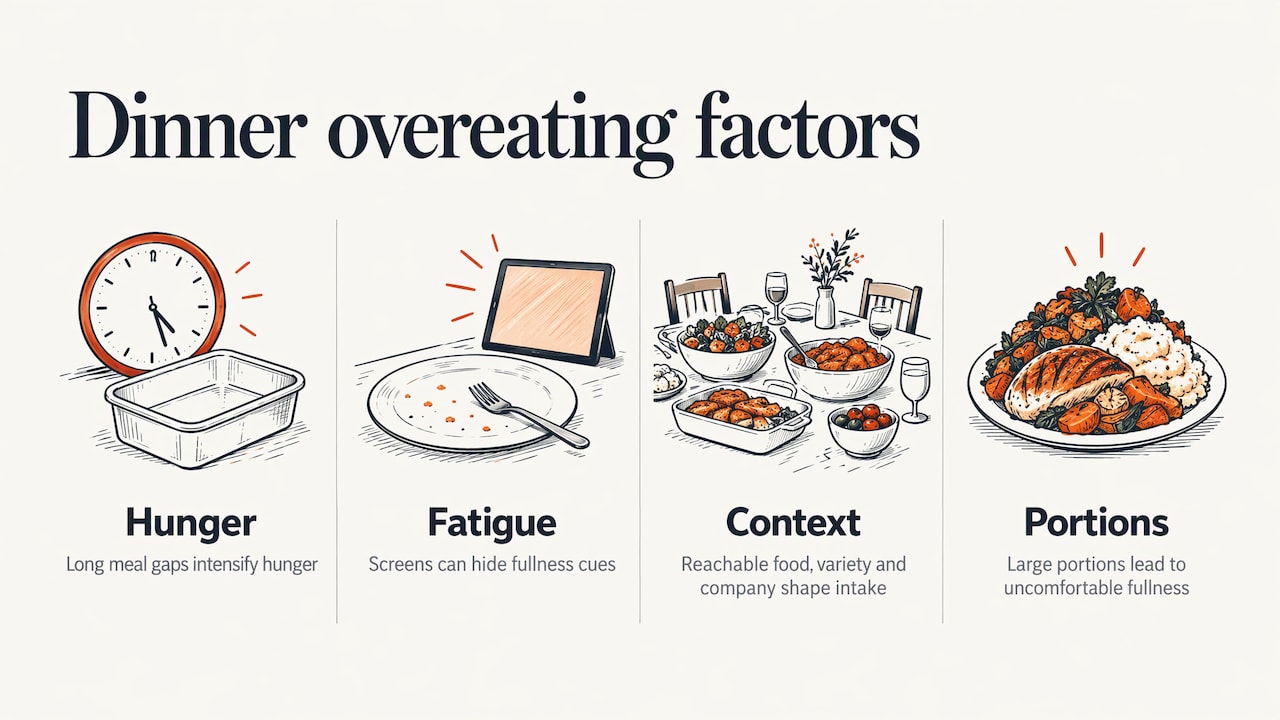
Cleveland Clinic describes overeating as eating past the point of fullness, and notes that it is common in the evening and in social situations. Several things stack up at dinner at the same time.
You are hungrier. After a long workday with a rushed lunch, hunger signals get louder. A nutrition team at Spire Healthcare explains that long gaps between meals make hunger increasingly intense, which makes you more likely to eat fast and overeat.
You are tired and distracted. Dinner is often eaten in front of a screen. Health Canada notes that eating quickly can keep you from knowing when you are full, and that distracted eaters can eat larger portions or lose track of what they have already eaten.
The environment decides more than your appetite. A 2007 review in the Proceedings of the Nutrition Society found that the amount eaten at a meal depends less on internal need and more on context, such as tasty, energy-dense food within reach, variety, other people and competing tasks.
Portions push you past comfortable. A 2020 review in Frontiers in Nutrition found that large portions reliably lead people to eat until uncomfortably full, often without any conscious intent.
None of this is a character flaw. It is a predictable mix of timing, speed and setup, which is why small changes to each work better than a vow to “eat less tonight.”
Habit 1: Show up hungry, not ravenous
The old rule said not to snack before dinner. The CDC suggests the opposite: if you are hungry between meals, have a healthy snack such as a piece of fruit or a small salad, so you do not overeat at the next meal. MedlinePlus similarly recommends planning a satisfying lunch and afternoon snack so you do not reach dinner too hungry.
A practical version: if dinner is at 7:30 p.m. and lunch was at noon, schedule something at 4 or 5 p.m. that includes protein or fiber. Regular meal times matter too. NIDDK points out that delaying or skipping meals can lead to overeating later in the day.
Separate real hunger from cravings. Harvard Health explains that cravings usually fade within 15 to 20 minutes, while true hunger only gets stronger. Fatigue, lightheadedness and an empty feeling in the stomach point to hunger.
Habit 2: Plate in the kitchen, not at the table
The single most reliable fix for second servings is distance. The CDC advises serving food on individual plates in the kitchen instead of putting serving dishes on the table, to minimize second and third helpings. UCSF Health gives the same advice: serve your plate at the stove or counter.
If you cook for a family, this changes the question at the end of the plate from “should I take a little more?” to “do I want to get up for more?” Restaurants use the same logic when food arrives in small portions; this guide to serving dinner in small plates shows how pacing and sharing shape how much people eat.
Two more setup tricks:
- Use a smaller plate. Harvard’s Nutrition Source suggests a dinner plate no larger than 9 inches across, filled only once.
- Build the plate by proportion. UCSF Health suggests half vegetables, a quarter lean protein and a quarter starch.
If you tend to clear your plate out of habit rather than hunger, our guide on how to stop the clean plate habit walks through it step by step.
Habit 3: Put the screen away
NIDDK advises avoiding eating in front of the TV, while driving or walking, or while busy with other activities. Health Canada recommends making meals electronic free and sitting at the table rather than in front of the TV.
If a show is part of your evening, plan it: finish the meal at the table first, then watch. If you do eat on the couch, the CDC suggests putting a planned amount in a bowl rather than eating from the package. More on why this works is in our piece on distracted eating and mindless eating.
Habit 4: Slow the first ten minutes
The most useful single change is pace. A 2023 systematic review of 104 studies in Nutrition Research Reviews found that eating more slowly is linked to greater satiation, earlier meal termination and reduced snacking between meals, while faster eaters may feel less satisfied and eat more.
The same review describes eating rate as a habit that stays fairly consistent from meal to meal. That is good news: it means a pace you practice becomes your default.
How to slow down without counting chews:
- Put the fork down between bites. MedlinePlus recommends putting down your fork and swallowing before taking the next bite.
- Chew for flavor. Health Canada suggests chewing thoroughly to notice aromas, textures and flavors.
- Start with the best bites. Pay attention to the first mouthfuls, where enjoyment is highest.
- Aim for a meal that lasts at least 15 minutes. That is NIDDK’s minimum for fullness to register.
The trouble is that a generic timer does not fit every dinner. A bowl of soup, a steak and a pasta plate each ask for a different rhythm. That gap is what Stummy fills: it analyzes your meal photo for food type, portion and texture, then builds a pace for that meal.
Habit 5: Take a mid-meal pause
UCSF Health recommends taking a minute or two break at least once during a meal to reflect. Harvard’s Nutrition Source describes eating slowly enough that you can recognize when you are about 80% full and stop there.
Try this at the halfway point of your plate: set the fork down, take a sip of water, and rate your fullness from 1 (empty) to 10 (stuffed). Most people aiming for comfortable satisfaction stop around 7. Then look at what remains and decide whether you still want it. This pause is exactly what Stummy’s mid-meal fullness check prompts, so you do not have to remember it.
Habit 6: Decide on seconds after a delay
Fullness lags behind eating. Cleveland Clinic notes you may not notice you have overeaten for about 20 minutes after you stop. MedlinePlus gives a useful test: feeling stuffed about 20 minutes after finishing is a sign you ate too quickly.
So use a simple rule for second helpings: finish your first plate, clear the table, and wait. If you are still truly hungry after 15 to 20 minutes, have a small second portion. Harvard Health’s point about cravings applies here too: a craving fades, hunger does not. For the fuller picture, see our guide to satiety signals and how to stop eating when you are full.
Habit 7: Make the house portion friendly
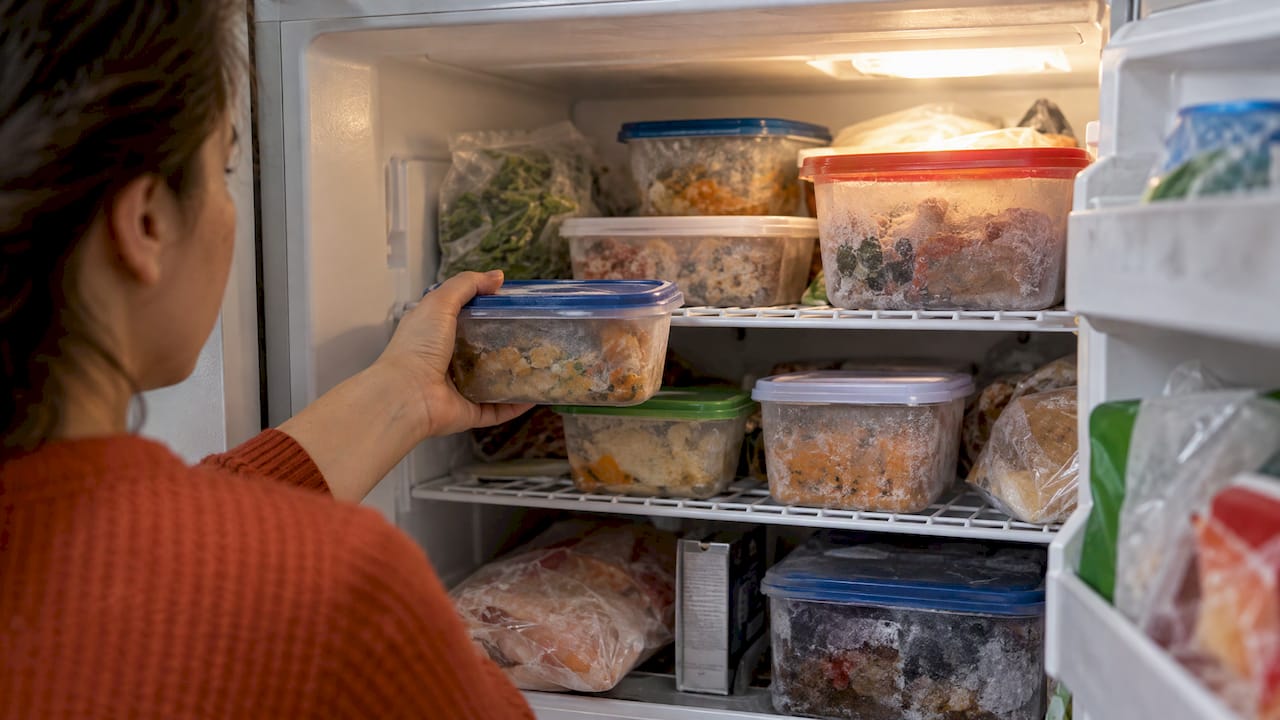
The CDC recommends making your home a “portion friendly zone”, for example by replacing the candy dish with a fruit bowl. Harvard Health suggests hiding snack foods in the back of a drawer. NIDDK adds that you can freeze leftovers in single or family-sized servings, so the pot on the stove is not a standing invitation.
Portion awareness does not require a kitchen scale. Our guides on controlling portions without weighing your food and portion size awareness cover how to read a plate by eye.
Habit 8: Check in before you eat
Registered dietitian Carrie Dennett, quoted by the American Heart Association, says mindful eating starts before the meal with asking yourself whether you are hungry and why you want to eat. Dinner after a stressful day is often an emotional meal. Cleveland Clinic lists stress and emotional eating among the causes of overeating, and notes that stress raises cortisol and can trigger cravings.
Ten seconds is enough: Am I hungry, tired or stressed? If it is stress, a short walk or a call may serve you better than a second plate. Mood-linked patterns also show up over time, which is why Stummy pairs eating pace with mood insights.
Habit 9: Plan for holidays and big spreads
Holiday tables break every rule above: variety, pressure, conversation, platters within reach. The American Heart Association suggests:
- Arrive pleasantly hungry but not ravenous.
- Start with half as much food on your plate as usual.
- Stand away from the buffet when chatting.
- Keep a polite line ready for food pressure, such as “It looks so good. I’m just so full.”
The same dietitian guidance says no food is off limits during the holidays and that not every meal needs to be perfectly balanced. HEART UK adds that we enjoy the first mouthfuls most and get less satisfaction as we continue, so small portions you savor, with a return trip only if still hungry, work well. For more settings like this, read our guide to avoiding overeating at restaurants, buffets and parties.
A sample dinner, start to finish
Here is how the habits combine on a Tuesday night:
| Time | What you do | Habit |
|---|---|---|
| 4:30 p.m. | Apple and a small handful of nuts | Not ravenous |
| 7:15 p.m. | Plate the food at the counter, put the pot away | Kitchen plating |
| 7:20 p.m. | Phone in another room, sit at the table | No screens |
| 7:20 to 7:30 p.m. | Fork down between bites | Slower pace |
| 7:30 p.m. | Pause, sip water, rate fullness | Mid-meal check |
| 7:40 p.m. | Finish, clear the table | Delay |
| 8:00 p.m. | Still hungry? Small second portion, otherwise tea | Decide on seconds |
How Stummy helps you pace dinner
Stummy is a mobile app for mindful eating. You photograph your plate, and the app analyzes the food type, portion and texture to create an eating pace for that meal. It does this without tracking calories. During the meal, haptic bite cues guide your rhythm without a screen in your face, and a mid-meal fullness check prompts you to pause. Targets adapt to your habits, and history tracking and mood insights show patterns over time.
The app is free to use, and the main step today is joining the waitlist for early access at stummy.app.

Our guide to late night snacking is a good follow-up if dinner is not where the evening ends, and the Stummy blog collects our other eating pace guides.
Our perspective
Most advice on overeating tells you what to do and leaves out how fast to do it. Pace is the lever that makes the rest work: a smaller plate does little if it is empty in six minutes, and a pause means nothing if you are already stuffed.
We built Stummy because a generic timer ignores the plate in front of you. A crisp salad, a dense lasagna and a bowl of ramen ask for different rhythms, so our app reads each meal’s photo and sets a pace for that meal. Our approach is designed to adapt with every dinner, so your targets follow your habits instead of a fixed rule.
We also think change should feel calm. Haptic cues keep the guidance off your screen, and there is no calorie counting, so dinner stays about enjoying food and noticing fullness. Initial research shows that slower eating promotes satiation, and we want that to be a gradual habit you keep, not a rule you resent.
VEID
What to do if you overeat anyway
It will happen, especially on holidays. Cleveland Clinic suggests taking a walk, staying hydrated, sipping herbal tea such as peppermint, chamomile or ginger, or taking an over-the-counter antacid. Discomfort should start improving within a few hours. See a healthcare provider if symptoms worsen or last a week, and consider raising it with one if overeating happens more than once a week for a few months.
FAQ
How long should dinner take?
Aim for at least 15 minutes, since NIDDK notes fullness signals can take that long to register. Twenty to thirty minutes gives you room for a mid-meal pause. Pace matters more than the exact number.
How do I avoid second servings?
Plate your food in the kitchen and leave serving dishes off the table, as the CDC recommends. Then wait 15 to 20 minutes after finishing before deciding. If the urge is a craving, it will usually fade.
Is it bad to snack before dinner?
Not necessarily. The CDC suggests a healthy snack such as fruit or a small salad when you are hungry between meals, to avoid overeating at the next one. The goal is to arrive pleasantly hungry rather than ravenous.
How do I stop overeating at home when I eat alone?
Sit at the table, put your phone away and serve one plate. Pause halfway to check your fullness. A pacing app like Stummy can add haptic bite cues and a mid-meal fullness check so the routine does not depend on memory.
Sources
- Overeating: Causes, Symptoms & How to Stop, Cleveland Clinic
- Food Portions: Choosing Just Enough for You, NIDDK
- Take time to eat, Health Canada
- Overeating in Restrained and Unrestrained Eaters, Frontiers in Nutrition
- Cues to overeat, Proceedings of the Nutrition Society
- Why do I overeat? Spire Healthcare
- How to Avoid Portion Size Pitfalls, CDC
- Eating habits and behaviors, MedlinePlus
- 5 ways to outwit your appetite, Harvard Health
- Behavior Modification Ideas for Weight Management, UCSF Health
- Mindful Eating, Harvard Nutrition Source
- Factors associated with eating rate, Nutrition Research Reviews
- Eating mindfully through the holidays, American Heart Association
- Heart Healthy Christmas Meal, HEART UK
- Small Plates Dining: How to Order, Share and Enjoy It