Mindful Eating With Your Phone: Use It Without Getting Distracted
Phones usually pull attention off your plate, but one used the right way can pace your meal. Learn what research says and how to set it up.
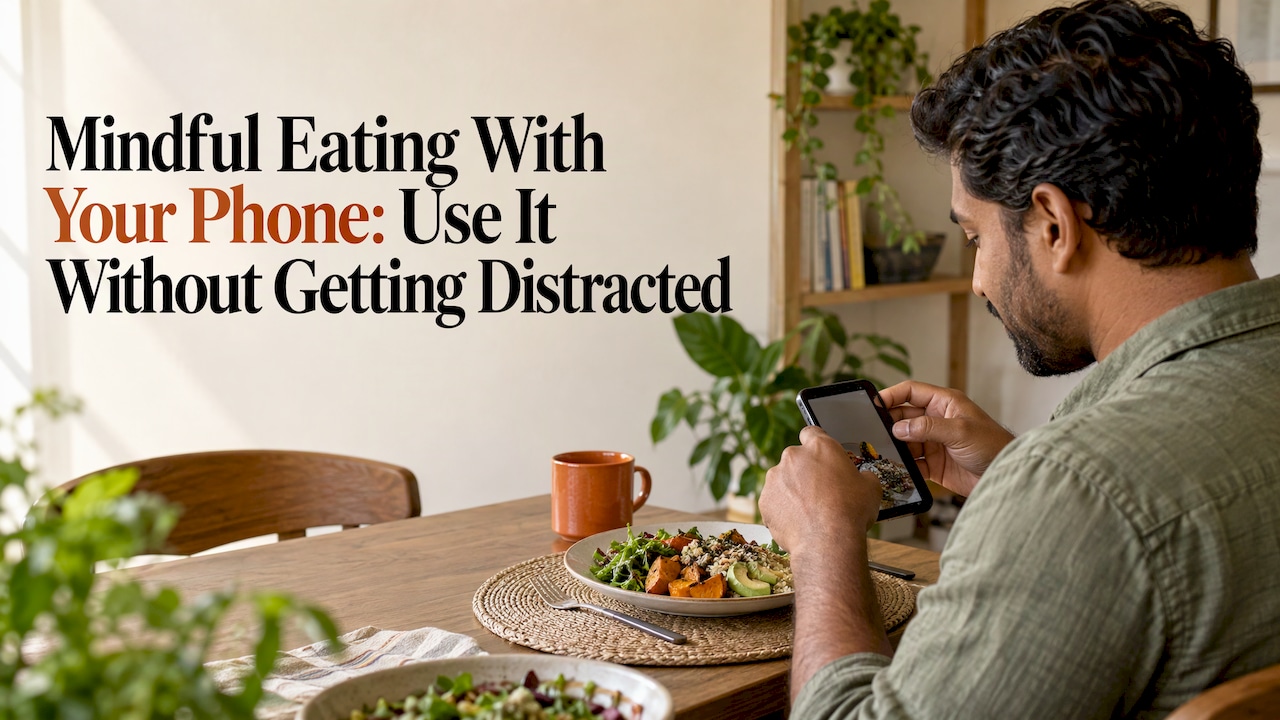
Your phone can ruin a mindful meal or help you pace it, and the difference is what the screen asks of you. Scrolling splits your attention and pulls you away from your food. A tool that works from a single photo of your plate, then guides your pace with vibration cues instead of a feed, keeps your eyes and attention on the meal. That is the idea behind Stummy, and the rest of this guide shows how to tell the two uses apart and set up either one so it works.
TL;DR
- Scrolling while you eat is linked to higher later intake: a 2026 meta-analysis of 50 studies found distracted eating increased intake at the next eating episode.
- Slow, attentive eating gives your body time to signal fullness. About 20 minutes per meal is the common rule of thumb.
- The phone helps when it takes a few seconds before the meal and then stays out of sight, with cues you feel rather than read.
- A simple routine: photo, set a pace, put the screen down, check fullness halfway through.
- Stummy is a free app that works this way, with no calorie counting. You join the waitlist for early access.
Table of Contents
- Is it okay to use your phone while eating?
- Why pace is the real issue
- Where a phone helps and where it gets in the way
- A phone routine for mindful meals, step by step
- Making it work on a busy day
- What the evidence says about expectations
- Our perspective
- Try paced eating with Stummy
- FAQ
- Sources
Is it okay to use your phone while eating?
The research does not say that every glance at a screen makes you overeat. It says that what you do on the screen, and when, matters.
A 2026 systematic review and meta-analysis of 50 studies found that distraction’s overall effect on the amount eaten during the meal itself was not statistically significant. Passive distractors such as TV did increase intake during the meal. The clearer finding came later: distracted eating increased how much people ate at a subsequent eating episode. In other words, the cost may show up at your next snack or meal, when you have little memory of the last one.
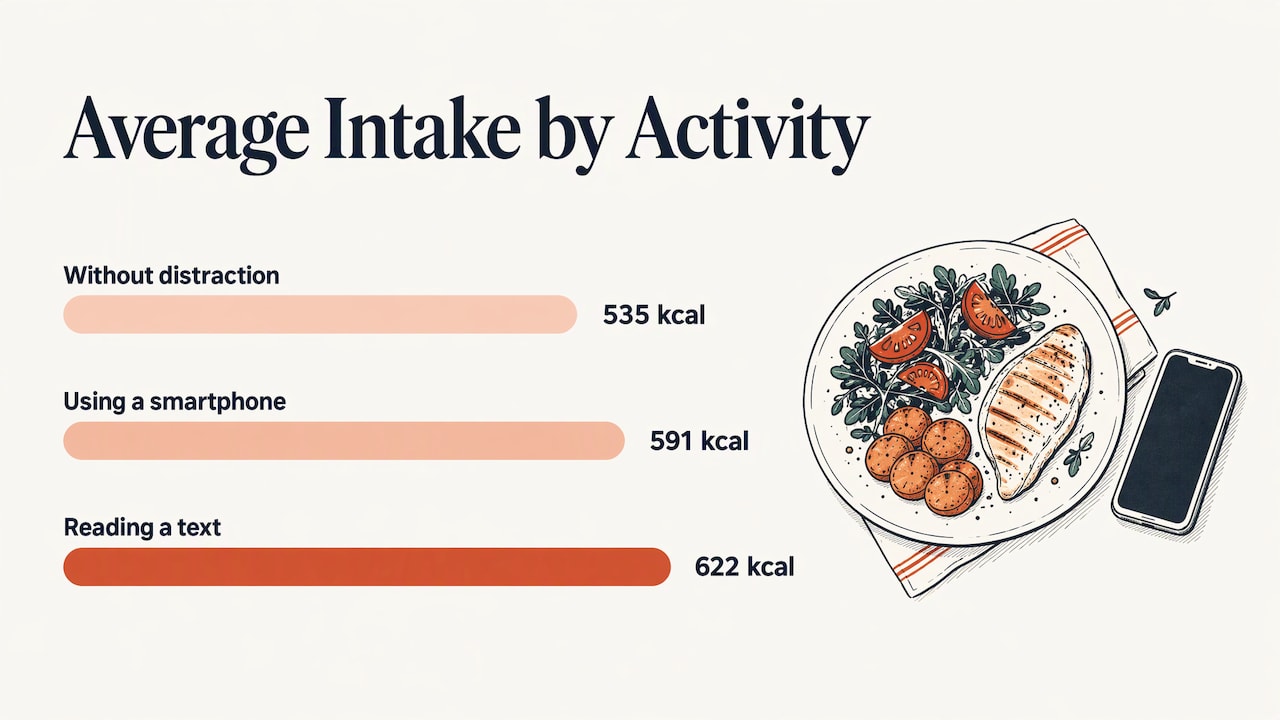
A 2019 study of 62 adults measured the effect directly. Average intake was 535 kcal without distraction, 591 kcal while using a smartphone and 622 kcal while reading a text. That is roughly 15% more with a distractor, and the effect varied by sex and age.
Results are not uniform. In a 2025 experiment with 114 college students, people ate more while watching TV than when undistracted, but no such increase appeared with a smartphone. So if you want a single rule, make it this: the screen is not the problem by itself. Eating without noticing is.
Mindful eating means paying attention to the food and to how you respond to it: how it looks, smells and tastes, how fast you are eating and how full you feel. The US Department of Veterans Affairs notes that mindless eating, such as in front of the TV or while on the phone, is common, and its patient guide advises putting the phone away and refocusing when your attention drifts. Health Canada goes further and recommends making mealtimes electronic free, because eating quickly can keep you from noticing when you are full.
If you want the longer explanation of what distraction does to a meal, we cover it in our guide to distracted eating.
Why pace is the real issue
Most people who search for how to use a phone for mindful eating are really trying to fix one of two things: they eat too fast, or they eat without registering the meal. Both come down to pace.
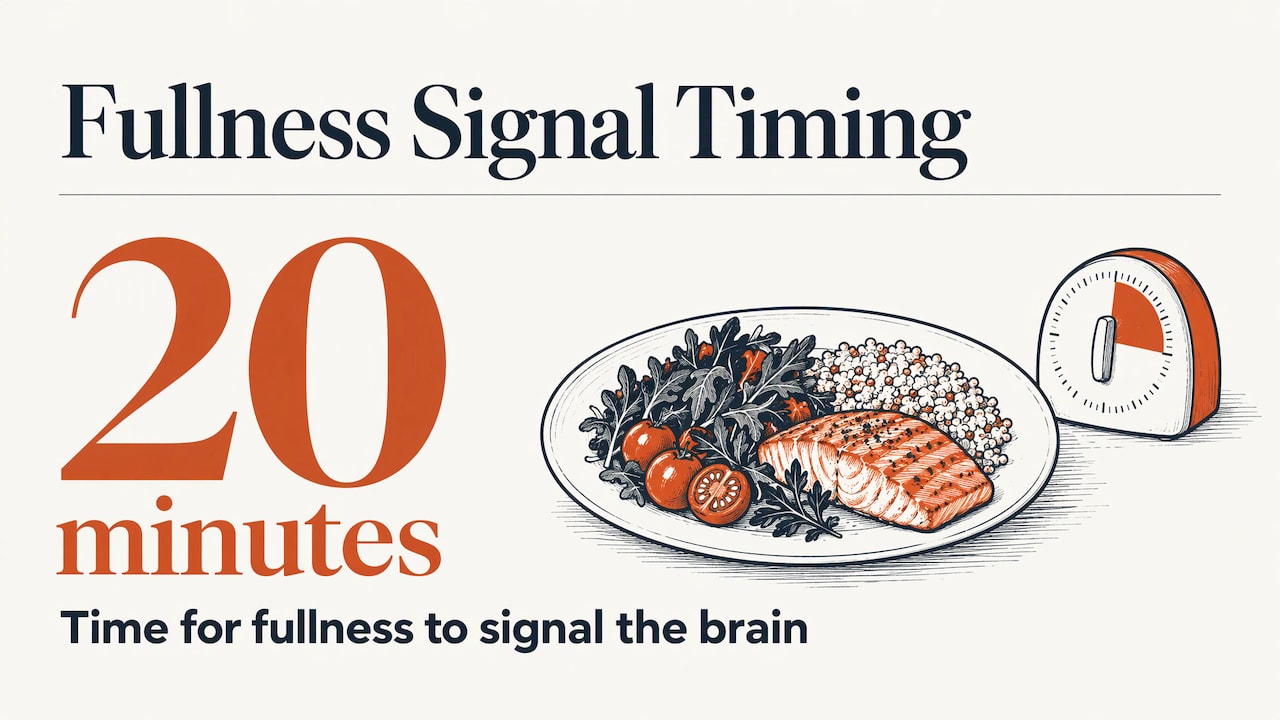
Fullness is a signal that takes time to arrive. Lilian Cheung of the Harvard T.H. Chan School of Public Health, quoted by NPR, recommends stretching a meal to about 20 minutes because that is how long the body needs to signal fullness to the brain. If a meal is over in eight minutes, you have finished eating before the message arrives.
That is why a phone that only adds stimulation works against you, and why a phone that slows you down can work for you. If you want to understand the signal itself, read about satiety signals and how to hear them, or about how to stop eating when you are full.
Where a phone helps and where it gets in the way
The useful question is what each feature of the phone asks of your attention. A rough sort:
| Phone use | What it asks of you | Effect on the meal |
|---|---|---|
| Scrolling, video, messages | Constant visual attention | Your eyes leave the plate; you lose track of bites and fullness |
| Reading a screen for guidance | Glances every few minutes | Better than scrolling, but still pulls you out of the meal |
| One photo before eating | A few seconds, before the first bite | Starts the meal with a decision about pace |
| Vibration or audio cues | No screen at all | Prompts a pause without interrupting the meal |
| Reminders and a home widget | A moment away from mealtime | Builds the habit between meals |
Researchers are working on this exact design problem. A 2025 CHI study called ViFeed found that subtle changes to video speed during screen-based dining led to 15.31% slower eating and 9.65% less intake while meal satisfaction was maintained. The authors argue that digital engagement is not inherently incompatible with mindfulness when it is designed around the meal. That supports the approach of using the phone for a cue rather than for content.
A 2018 proof-of-concept study of a 28-day self-paced smartphone mindful eating program in 104 women with overweight or obesity found a 40.21% reduction in craving-related eating, along with fewer self-reported episodes of overeating. Again, the phone was a delivery channel for attention training, not a distraction.
A phone routine for mindful meals, step by step
Here is a routine you can start at your next meal. Each step is small on purpose, because habits built from small steps tend to last.
1. Set the table before you pick up the phone
Sit down, clear the clutter and take a couple of slow breaths. Johns Hopkins Medicine suggests setting aside your phone and other distractions, looking at and smelling the food, and starting with just one or two mindful bites, using a five-minute timer if it helps. You do not need to make the whole meal perfect on day one.
Where it goes wrong: carrying the phone to the table “just to check one thing.” One notification and you are scrolling.
2. Take one photo, then stop
A photo of the plate is a quick pause that turns the meal into a decision: what is here, how much, and how long should this take? A chicken salad takes less chewing than a steak with rice, and a large portion deserves more time than a snack. A generic ten-minute timer ignores all of that.
This is where Stummy fits. Our app analyzes the food type, portion and texture in your meal photo and creates eating guidelines for that meal. It adapts your targets over time based on your eating habits, so the pace for a Tuesday desk lunch is not the pace for a slow Sunday dinner. It does this without counting calories.
3. Put the screen face down and let cues do the work
The point is that your eyes stay on the food. Turn the phone over or pocket it, and use a cue you feel. Stummy offers live sessions with haptic bite cues, which are vibrations that mark your pace so you do not need to watch a timer. If you are using another method, set a silent reminder every few minutes.
Where it goes wrong: checking the time on the lock screen. That is how a glance becomes five minutes of messages. A cue that arrives on its own removes the reason to look.
4. Slow your hands, not just the clock
Pace is a behavior, not a number. The NHS guidance on slowing your pace of eating recommends taking 20 minutes over a meal, chewing each mouthful 10 to 20 times, putting cutlery down between bites, sipping water between mouthfuls and checking your hunger level at set points. Health Canada gives the same advice about putting your knife and fork down and chewing thoroughly to notice aromas, textures and flavors.
If you want more ideas here, our guides on how to eat slower and how to take smaller bites have practical options.
5. Check fullness halfway through
At the midpoint, stop for a breath and ask how hungry you still are. Rate it on a simple scale from starving to stuffed. Stummy includes mid-meal fullness checks for this moment, so the question arrives when it is most useful instead of after the plate is clean. We cover the pause itself in how to take mindful breaks during meals.
Where it goes wrong: treating the check as a verdict. You are collecting information. If you are still hungry, keep eating, slowly.
6. Look back after the meal
History is where a phone beats a paper note. Over a week you can see which meals you rushed, at what time of day and in what mood. Stummy keeps a history of your meals and provides insights that reflect mood and eating pace, so patterns become visible. If you like writing things down, a mindful eating journal pairs well with it, and tracking mood patterns over time can show you which feelings tend to show up before a rushed meal.
Making it work on a busy day
The hardest meals are the ones you eat at your desk, in the car or between meetings. A few adjustments help.
- Shorten the goal. If 20 minutes is impossible, aim for two or three deliberate pauses in the meal rather than giving up. Our guide on mindful eating on a busy schedule goes deeper.
- Use reminders before the meal, not during it. A nudge at lunchtime beats a buzz mid-bite. Stummy has reminders and a home widget so starting a meal takes one tap.
- Make one meal a day your anchor. Pick the meal that is easiest to protect, often breakfast or dinner, and build from there.
- Plan for restaurants. Menus, conversation and bread baskets all speed you up. These tips for more mindful meals when eating out are a good place to start.
- Portion by eye. You do not need a scale to judge how much is on the plate; see how to control portions without weighing your food.
What the evidence says about expectations
Studies of mindful eating tools show that the benefits come from using them, not from owning them. In a 2017 randomized pilot study of a phone-based mindfulness program with 75 participants, the group using it scored significantly better on mindful eating and binge eating measures, and those who embraced the practices got more from them. That is a useful way to think about any app: the habit does the work, and the app makes the habit easier to start.
A 2025 pilot of a four-week virtual mindful eating program found a significant improvement in hunger and satiety cues and greater food appreciation at one-month follow-up. Early research on slower eating points toward better satiation, though results differ between people. Expect gradual change: a calmer pace in the first week, and a clearer sense of fullness over the following weeks as the routine settles.
One more point from the research is worth keeping in mind. A 2019 review of mindful eating apps concluded that apps work best when they go beyond timing and diary entries and guide attention to the senses, with engaging, varied media. When you choose a tool, look for one that helps you notice the meal itself, not just the clock.
Our perspective
We built Stummy on a simple observation: most people do not overeat because they do not know what is good for them. They overeat because the meal is over before the body has had a chance to say anything.
That is why we start with a photo instead of a calorie log. Food type, portion and texture all change how long a meal should take, so a fixed timer is the wrong tool. Our pacing guidance is set for each meal and adapts as we learn your habits.
We also think the phone should disappear during the meal. Haptic bite cues and mid-meal fullness checks are there so you can keep your eyes on your plate and your attention on your food. The screen does its work before and after the meal, in the history and mood insights that show you how you actually eat.
Mindful eating is a skill, and skills grow through small, repeatable steps. We would rather help you improve one meal this week than ask you to change everything at once.
VEID
Try paced eating with Stummy
Stummy is a free mobile app that turns a photo of your meal into personalized pacing guidance. It includes live sessions, haptic bite cues, mid-meal fullness checks, adaptive targets, history tracking, mood-based insights, reminders and a home widget. It does not track calories, and it is built around gradual habit change, not strict rules.

The app has no in-app purchases or subscriptions. To get early access, join the waitlist on the Stummy home page.
FAQ
Is it okay to use your phone while eating?
Occasionally glancing at it will not undo a meal, but scrolling regularly is a habit worth changing. A 2026 meta-analysis found that distracted eating increased intake at the following eating episode. A better habit is to use the phone briefly before the meal, then set it aside.
Can a phone really help with mindful eating?
Yes, when it asks for seconds of attention instead of minutes. A photo before the meal and vibration cues during it keep your focus on the food. Research on smartphone-delivered mindful eating programs has reported lower craving-related eating, and engagement with the practices matters most.
How long should a meal last?
Many guides, including NHS advice and the Harvard expert quoted by NPR, suggest about 20 minutes, since that is roughly how long fullness signals take to reach the brain. If that is too long for your day, start with a few deliberate pauses and build up.
Do I have to count calories to eat mindfully?
No. Mindful eating is about attention, pace and fullness. Stummy works without calorie tracking, using your meal photo and your own fullness checks instead.
Sources
- Eating while distracted: a systematic review and meta-analysis (2026)
- Smartphone use while eating increases caloric ingestion (2019)
- To stream or not to stream? Watching TV while eating (2025)
- Mindful Eating, US Department of Veterans Affairs (2022)
- Take time to eat, Health Canada
- Mindful eating: How to slow down, enjoy your meal, NPR
- ViFeed: Promoting Slow Eating and Food Awareness, CHI 2025
- Testing a mobile mindful eating intervention targeting craving-related eating
- Mindful Eating: What It Is and Tips to Get Started, Johns Hopkins Medicine
- How to slow your pace of eating, NHS
- A randomized pilot study of a phone-based mindfulness and weight loss program (2017)
- Piloting a Virtual Mindful Eating Program to Improve Eating (2025)
- Mindful Eating Mobile Health Apps: Review and Appraisal (2019)
- Eating Out While Losing Weight: A Practical Guide for Men
- Track Mood Patterns to Improve Wellbeing: A Practical Plan