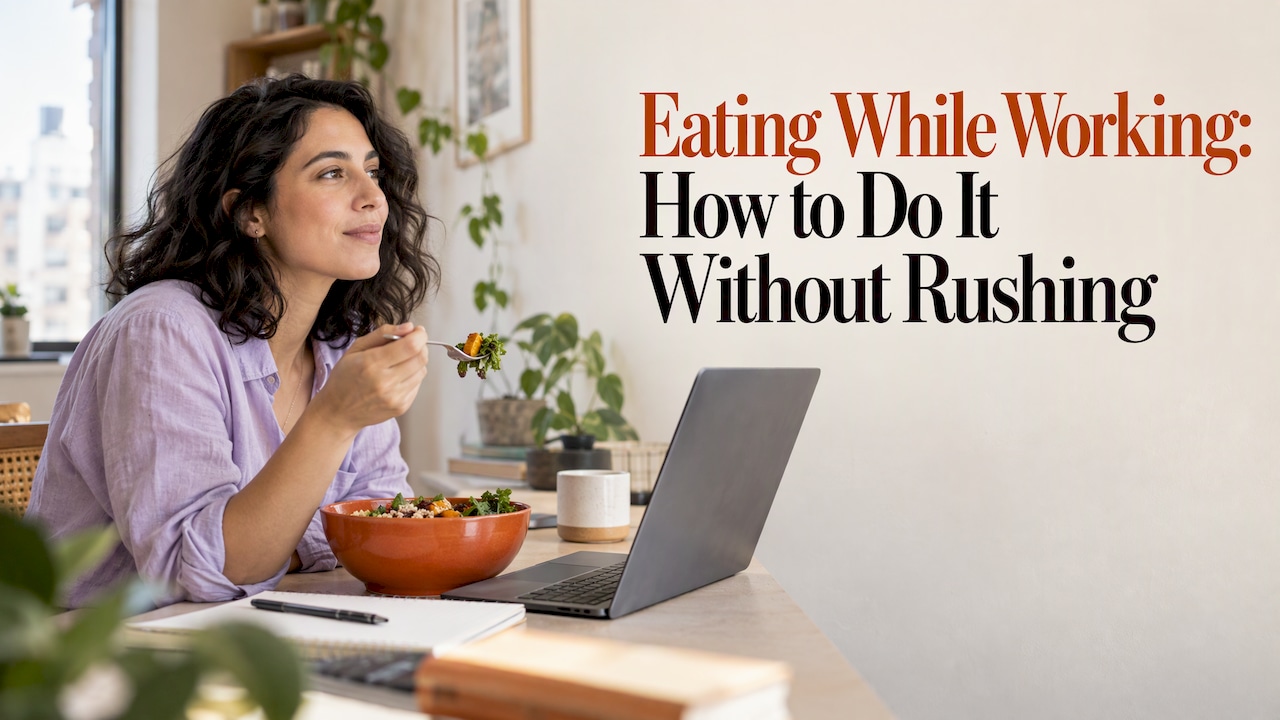
Eating While Working: How to Do It Without Rushing
Eating at your desk is common, but distraction makes fullness easy to miss. Here is what research says and how to pace a working meal without calorie counting.
Most people who eat while working are not choosing to eat badly. They are choosing to keep going. The problem is that a meal eaten behind a screen is usually eaten fast and half noticed. The fix is not a perfect lunch hour. It is pacing: giving the meal a few deliberate pauses, even at your desk. Stummy is a free app built for exactly that: you photograph the meal, and it sets a pace for that food, that portion and that texture, with no calorie counting.
TL;DR
- Eating quickly and eating while distracted can make fullness harder to notice, according to Health Canada.
- Time pressure, more than stress in general, is linked to more snacking in a 2026 study, so a deadline is a cue to slow down, not to skip the meal.
- Small habits work at a desk: utensils down between bites, a tech break, a plate instead of a package.
- Plan meals and snacks ahead so you are moderately hungry, not desperate, when you sit down.
- Stummy gives you a pace for each meal from a photo, with haptic bite cues so you do not have to watch a timer.
Table of Contents
- What happens when you eat and work at the same time
- Why deadlines change how you eat
- How to pace a meal at your desk
- What to eat so the meal actually satisfies
- A realistic desk-lunch routine
- Perspective
- Try it on your next working lunch
- FAQ
- Sources
What happens when you eat and work at the same time
When attention is on an email thread, the meal becomes background. Health Canada notes that eating quickly can make it harder to notice fullness, and that distraction can lead people to lose track of how much they have eaten. A 2010 review of eating rate in Nature Reviews Endocrinology points to fast eating and distraction as features that may weaken the regulation of intake, because quickly eaten food gives less sensory exposure and weaker satiation signals.
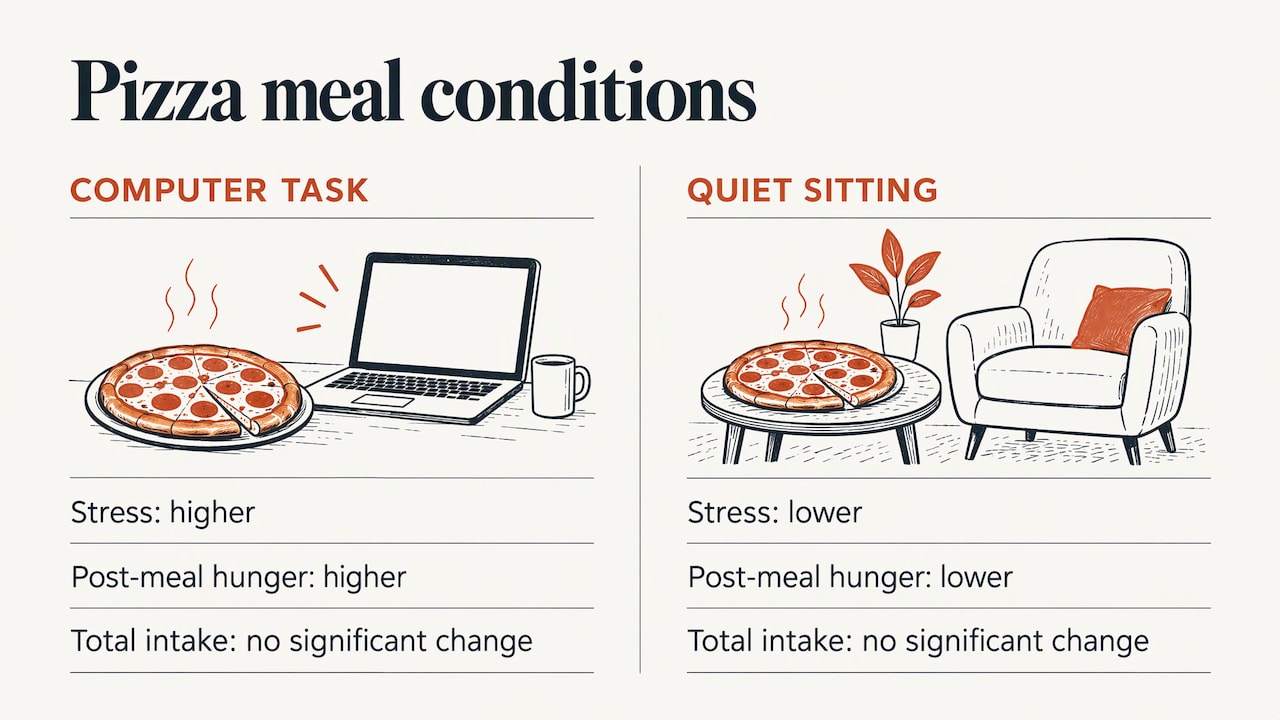
The evidence on a single working meal is more nuanced, and worth knowing. In a 2019 experiment of 43 adults, people ate pizza while doing a computer task or while sitting quietly. Working while eating raised stress and left people hungrier after the meal, though total intake did not change significantly in that mostly normal-weight group. The authors note that one meal cannot show long-term effects.
So the honest picture is this: eating at your desk may not make you eat dramatically more in one sitting, but it can leave you less satisfied, which sets up the 3 p.m. raid on the snack drawer.
Why deadlines change how you eat
Stress does not push everyone the same way. Harvard Health describes stress eating as variable: some people graze, crave or eat fast, while others lose their appetite, skip meals and overeat later. Cortisol and learned links, such as deadline equals snack, may play a part.
A 2026 study that tracked 64 people for four weeks found that moments of time pressure were tied to higher odds of snacking (odds ratio 1.34), though people reported eating smaller amounts. General stress alone was not linked to snacking. The researchers suggest specific constraints like time pressure may matter more than stress as a blanket category.
Interviews with 22 South Korean office workers fit the pattern: most said they ate more under stress, many craving sweet, salty or greasy food, while some lost their appetite. These are perceptions, not measurements, but they will sound familiar.
The practical takeaway is to notice which kind of pressure sends you to the food. If you want to go deeper on emotional triggers, there is a useful overview of how stress may affect eating patterns, including cravings, grazing and reduced appetite. Our own guide to stopping stress eating turns this into steps.
How to pace a meal at your desk
The best option, when you can manage it, is to step away. Health Canada’s work eating guidance says eating away from the desk helps you take time to eat and focus on the meal. When that is not possible, use the same ideas in a smaller form.
- Eat when moderately hungry. USC WorkWell recommends eating when moderately hungry rather than waiting until you are extremely hungry. Extreme hunger is when pace disappears.
- Take a technology break. The U.S. National Institutes of Health suggests a tech break during meals. Even five minutes with the screen locked counts.
- Put your fork down between bites. Health Canada lists this alongside chewing thoroughly and noticing fullness.
- Check fullness halfway. Pause mid-meal and ask whether you still want the rest. Continuing is not a failure; the point is to ask.
- Keep it flexible. A meal does not need to hit a stopwatch target. Comfortable pauses beat fixed chew counts.
- Mind the desk itself. The NIH notes that keyboards, phones and mice are touched constantly and rarely cleaned, so wipe the desk and wash your hands before you eat.
The hard part is remembering any of this while you are mid-task. That is where a prompt that does not need your eyes helps. For more routines, see our guides to eating slowly on your lunch break and taking mindful breaks during meals.
What to eat so the meal actually satisfies
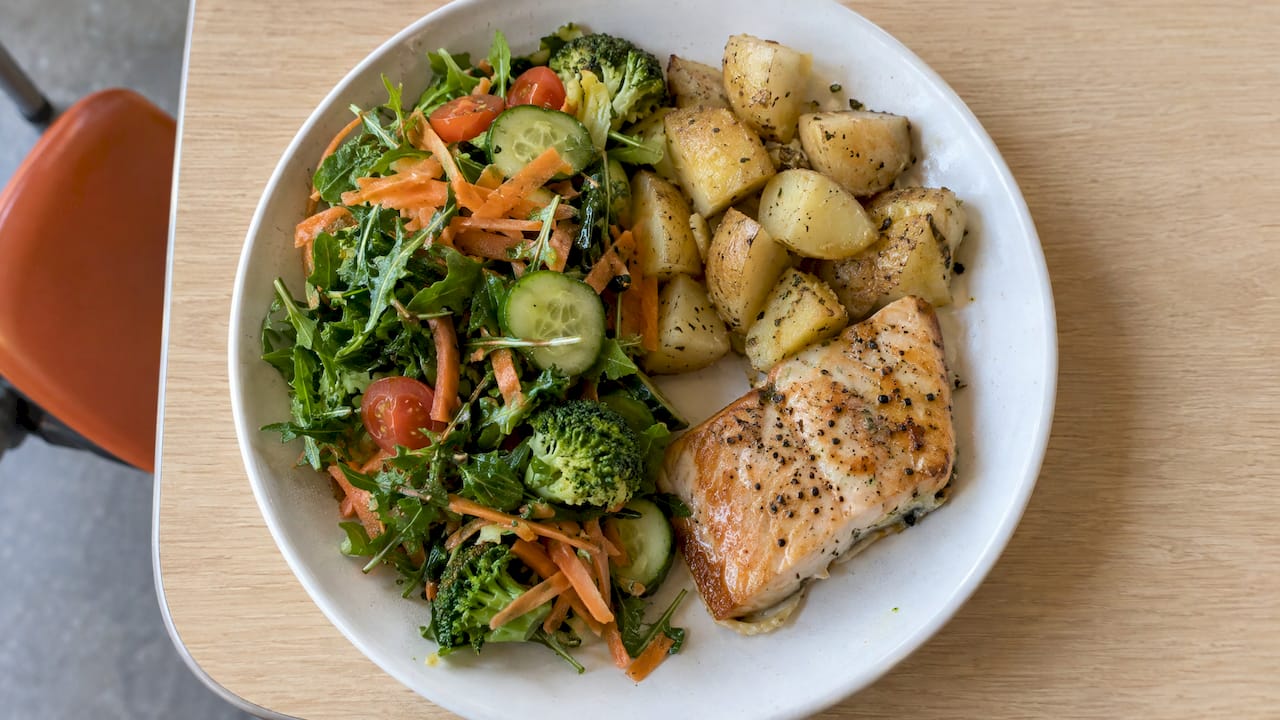
Pacing works better when the food holds you. Finland’s worktime meal recommendation suggests a plate of half vegetables, a quarter potatoes or whole grains, and a quarter fish, plant protein or lean meat. It also says most people do well with 3 to 6 meals or snacks a day, roughly every 3 to 5 hours.
For snacks, combine food groups. The British Dietetic Association gives examples such as fruit with yogurt or whole-grain bread with peanut butter, and notes that many crisps, sweets and biscuits provide little fibre or protein and may not keep you full for long. It also advises avoiding snacks while working or using screens.
Two habits make the difference:
- Plate it. Mayo Clinic Health System advises portioning a snack into a bowl rather than eating from the package.
- Stock the drawer. Health Canada suggests keeping oats, whole-grain crackers, canned fish, nut butter, fruit, nuts and seeds on hand, and limiting highly processed foods and sugary drinks at work.
Preparing food ahead is the other half. A few ideas for making time to eat on a busy day are about the same: decide before the day starts, so lunch is not a decision made under pressure.
A realistic desk-lunch routine
Here is how a busy day can look without heroic effort.
- Before 12: Pack or order a meal with a protein, a vegetable and a whole grain. Put it on the calendar as a block, even 20 minutes.
- At the meal: Plate the food, lock the screen, wipe the desk. Take the first three bites slowly.
- Midway: Put the fork down and check your fullness.
- Afterward: Stand up, walk for a few minutes and note how you feel.
If your day swallows lunch entirely, our guides to mindful eating on a busy schedule and eating on the go cover the in-between cases. If the autopilot is the issue, read about distracted eating and mindless eating.
Perspective
We built Stummy around one observation: generic advice like “slow down” fails because a bowl of soup, a sandwich and a salad do not ask for the same pace. A photo of the meal lets us look at food type, portion and texture and set a pace for that plate, then adapt the target as your habits change.
At a desk, the guidance also has to stay out of the way. Haptic bite cues and a mid-meal fullness check mean you are not staring at a timer while you work. And because we do not track calories, the meal stays about awareness, not arithmetic.
Our approach is gradual. Mood-based insights and history show you which days rush you most, so the habit changes by small steps rather than by willpower. Initial research shows slower eating promotes satiation, though individual results vary.
VEID
Try it on your next working lunch
Stummy is a free app, with no in-app purchases or subscriptions. Photograph your meal, get a pace built for that food, and let haptic cues and a fullness check carry the routine while you work. Early access is open through the waitlist at stummy.app.

It includes live sessions, adaptive targets, history, reminders and a home widget, so the habit builds without any calorie counting. For a longer view, see how to build a mindful meal routine that lasts.
FAQ
Is it bad to eat at your desk every day?
Not inherently, but it makes fast, distracted eating more likely, and Health Canada notes this can make fullness harder to notice. If the desk is your only option, take a screen break, clean the surface and put your utensils down between bites.
Does eating while working make you eat more?
Results vary. In a 2019 single-meal experiment, working while eating did not significantly change intake but did raise stress and post-meal hunger. Hunger afterward is what often leads to extra snacking later.
How long should a working lunch take?
There is no official stopwatch target, and a meal need not meet one. Aim for unhurried pauses and a mid-meal fullness check. Finland’s recommendation advises protecting lunch in calendars and keeping it free of meetings.
What are good snacks to eat while working?
Pair food groups: fruit with yogurt or nuts, vegetables with hummus, or whole-grain crackers with protein. Put the portion in a bowl rather than eating from the package.
Sources
- Take time to eat, Health Canada
- Healthy eating at work, Health Canada
- Slow food, fast food and the control of food intake, Nature Reviews Endocrinology
- How is Satiety Affected When Consuming Food While Working, Nutrients 2019
- How to curb your stress eating, Harvard Health
- Stressors, Emotions and Eating, Stress and Health 2026
- Perceptions of stress and eating among South Korean office workers
- Desktop Dining, NIH
- Navigating eating during the workday, USC WorkWell
- Worktime meal recommendation, Finland
- Healthy snacks, British Dietetic Association
- Mindless munching or sensible snack, Mayo Clinic Health System